How to Make a Whiskey Sour
The classic three-ingredient cocktail that every home bartender should master
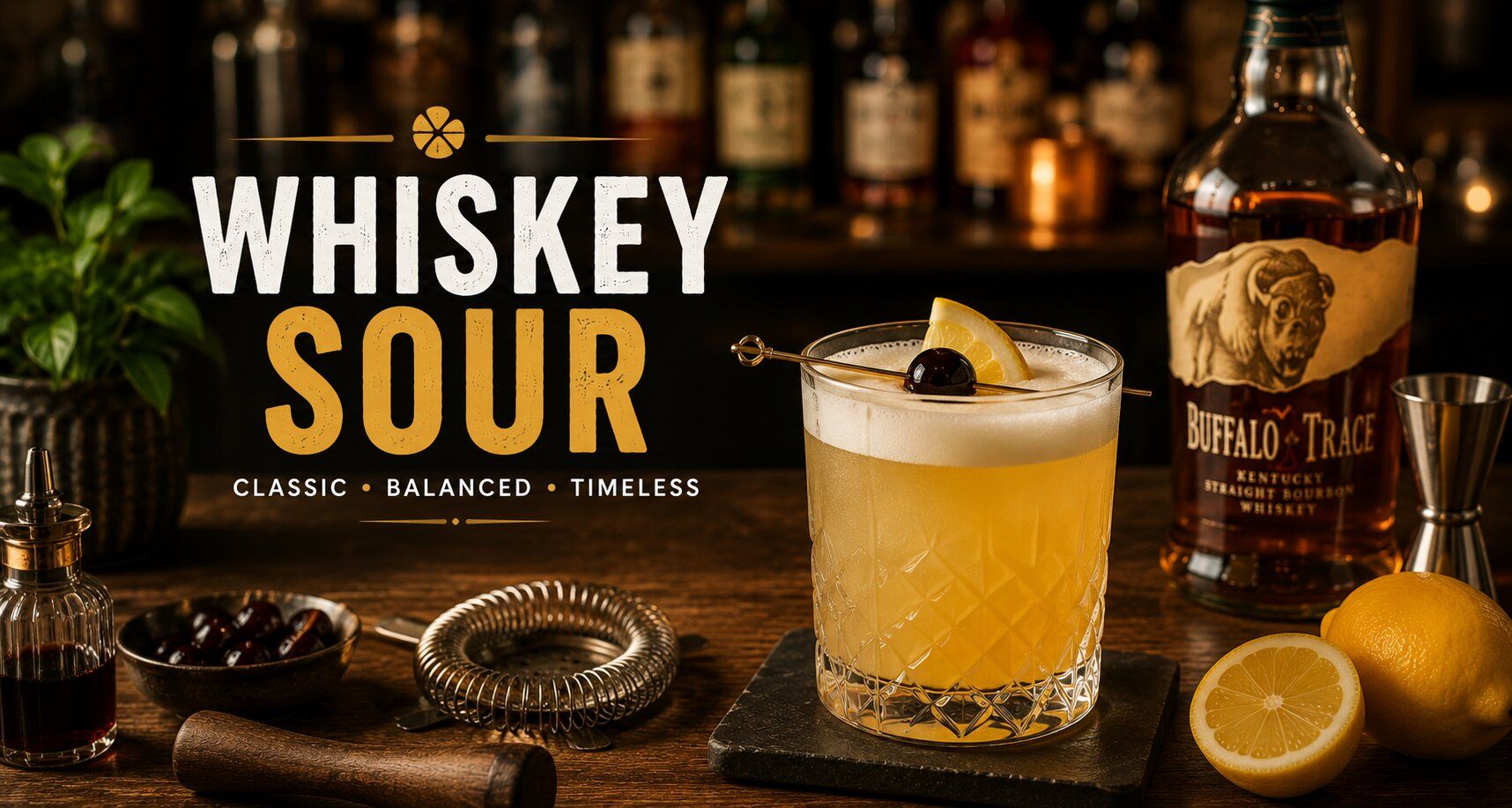
The Whiskey Sour is a perfect cocktail not because it's complicated, but because it isn't. Three ingredients, one shaker, and about ninety seconds of effort. Get it right and you have a drink that is bright, smooth, and deeply satisfying. Here's exactly how to make one.
TLDR?
Just want the recipe? Here it is:
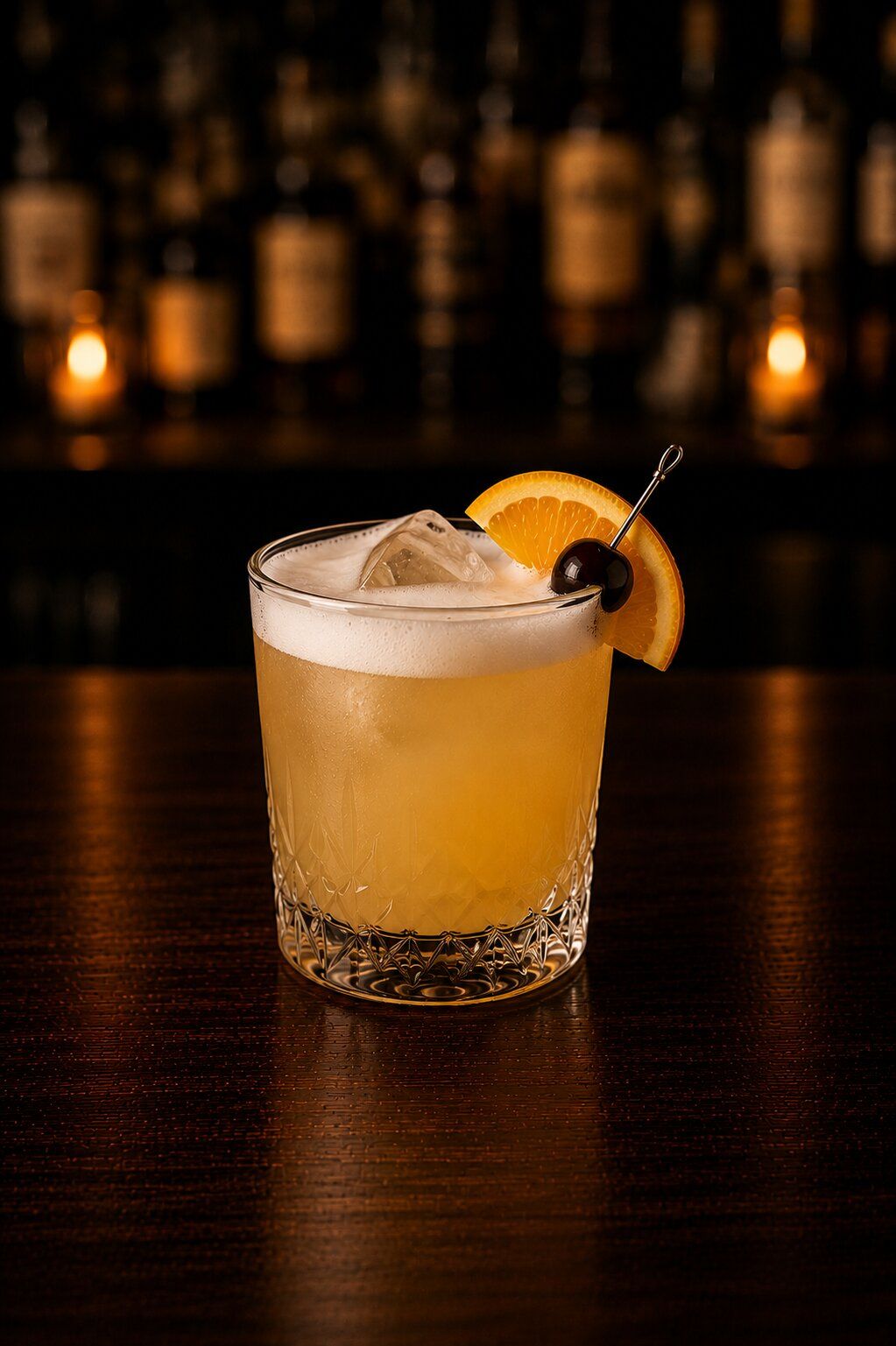
Featured Drink
Whiskey Sour
The perfect balance of sweet and sour. Bourbon, lemon juice, and sugar shake into a silky, satisfying classic.
What You Need
Bourbon is the traditional choice — its natural sweetness plays beautifully with lemon. Rye works too if you prefer something spicier. Beyond the whiskey, you need fresh lemon juice (bottled will ruin the drink), simple syrup, and ice. If you want the silky foam that separates a good sour from a great one, you'll also need one egg white and the patience for a dry shake.
The spec: 6 cl bourbon, 3 cl fresh lemon juice, 2 cl simple syrup, 1 egg white (optional).
The Method
If you're using egg white, add all ingredients to your shaker without ice first. Shake hard for fifteen seconds — this is the dry shake, and it's what builds the foam. Then add ice and shake again for another fifteen seconds until the tin is frosted and cold. Strain into a chilled coupe or rocks glass. If you skipped the egg white, simply shake all ingredients with ice and strain.
No garnish is strictly necessary, but a few drops of Angostura bitters on top of the foam adds aroma and a dash of visual drama.
Common Mistakes
Using bottled lemon juice is the most common error. It tastes flat and metallic compared to fresh. The second is over-pouring the sweetener — a Whiskey Sour should be tart first, sweet second. Start with 2 cl of simple syrup and adjust to taste. Finally, don't skip the dry shake if you're using egg white. Shaking with ice alone won't produce the same velvety texture.
A Simple Variation
Float a thin layer of dry red wine on top and you have a New York Sour — the same drink dressed up for dinner. Swap the simple syrup for honey syrup and you have a Gold Rush, richer and more aromatic. Both use the exact same technique, which is why mastering the base recipe unlocks so much.